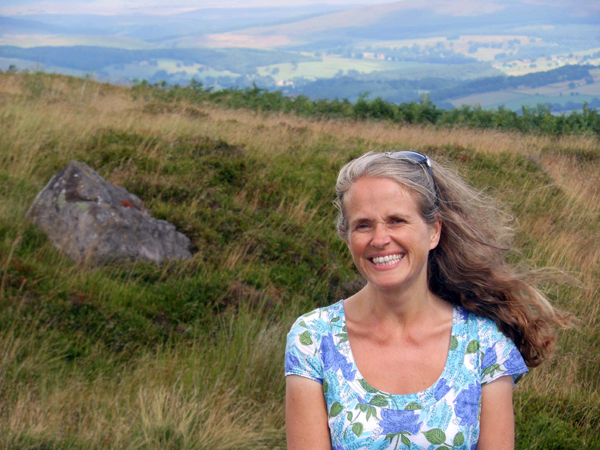
Guest post: Cathy Bryant on ‘Moments with Mothers and (Imaginary Daughters)’

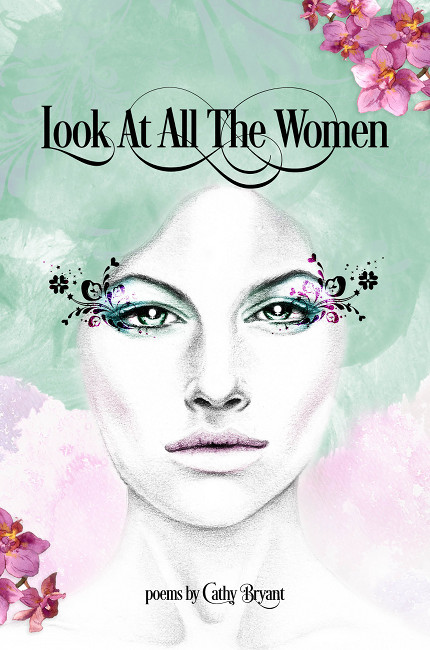
This post was written especially for inclusion in the three-week-long ‘Look At All The Women’ carnival, hosted by Mother’s Milk Books, to celebrate the launch of Cathy Bryant’s new book ‘Look At All The Women’. This week our participants share their thoughts on the theme ‘The Mothers’ (the second chapter in Cathy’s poetry collection).

Please read to the end of the post for a full list of carnival participants.

***

I learned about loving mothers from Facebook friends. They miss their children when they go to school; they help with projects; they care and love and argue and resolve. They hold their children in tender arms. They get through their children’s adolescence somehow, and nurture the emerging adult as carefully as one might help a struggling newborn butterfly out of the last husk of its chrysalis. This was all news to me – joyful, wonderful news. I am so glad that people feel that kind of love. It’s the most beautiful thing in the world.

As you might have guessed, I’m a bit jealous really. I don’t have any contact with my mother, nor do I desire any. I won’t go into the whole morass of that here. Neither am I a mother myself (except of books – oh, the births are difficult, but they are so beautiful and you love them so much when they arrive)!

Facebook showed me a world of love and caring and kindness and yes, problems and imperfections, but all against that amazing background of loving motherhood.

Mothers, I take my hat off to you. I do have an imaginary daughter. We watch films together and take walks together (I’m not disabled when I’m with her). She changes her name every so often. This first poem was inspired by her:

Skimming Moments

Mummy, where do ripples come from?

From the stone pushing the water, darling.

And where do the ripples go when they stop?
And where did I come from?

You remember then that because of the most
extraordinary concatenation of circumstances
you looked up and he looked up and your hearts
gave a lurch and somewhere a butterfly flapped
its wings like a beating heart and that’s
how typhoons start and children get born.

You squeeze your daughter’s hand and wonder
how to explain chance, love, biology, mathematics,
loss. You smile helplessly, sadly at her
and she laughs back and dances.

***

This second poem was inspired by Rudyard Kipling’s poem ‘If’. http://www.poetryfoundation.org/poem/175772

I’ve always had issues with it – it seems to be more about repression than emotional maturity, and I wouldn’t want to use it as advice for a child. So I wrote my own version:

When

When you know the time to be strong
and when to give way to your feelings;
when you will stand up for yourself
as others blame you unfairly, yet
still be tolerant of different views;
when you can meet triumph and disaster
and know to celebrate one and mourn the other,
because otherwise you’d be a ridiculous
unfeeling rock and your life pointless;
when you know better than to risk all
your life’s winnings on a single bet;
when you know that your will is one
of many, all deserving equal respect;
when you can listen in and to crowds, and not
lose the common touch when with royalty;
when you allow people close enough to hurt
you and know your vulnerability, know you;
when you truly love the planet and those in it,
despite the hatred and mocking laughter,
then you will have truly grown up –
and then, you’ll be a Woman, my daughter.

***

Look At All The Women is now available to buy from:

The Mother’s Milk Bookshop (as a paperback and PDF) – we can ship books around the world!

and as a paperback from Amazon.co.uk.

It can also be ordered via your local bookshop.

If you’d like to get involved in the ‘Look At All The Women’ carnival please find more details about it here.

Please take the time to read and comment on the following fab posts submitted by some wonderful women:

‘Moments with Mothers and (Imaginary) Daughters’ — Cathy Bryant, guest posting at Mother’s Milk Books, shares more poetry from Look At All The Women — her own version of Rudyard Kipling’s ‘If’ and a poem inspired by her imaginary daughter.

‘The Cold Cup of Tea’Marija Smits shares some poetry that gives a glimpse into the everyday life of a mother.

‘Creative Mothers: You Need to Stop!’Georgie St Clair, shares an important reminder, that all mothers need to dedicate time and space to be creative.

‘The Mothers – Or Promises to My Future Child’ — Kimberly Jamison posts to her blog The Book Word what she has learnt from her own mother, and writes an open letter to her future child.

‘Bonobos are my Heroines’: Ana Salote at Colouring Outside the Lines puts the nature back into nurture.

‘Baby Body Shame: it’s Time to Push Back’ — Stephanie from Beautiful Misbehaviour wants to challenge society’s treatment of the post-birth body.

Helen at Young Middle Age talks about finding strength from thinking about all the other mothers, during hard times.

Guest post: Cathy Bryant on ‘Fantasy, love and oddity’

Welcome to the ‘Look At All The Women’ Carnival: Week 1 – ‘The Lovers’

This post was written especially for inclusion in the three-week-long ‘Look At All The Women’ carnival, hosted by Mother’s Milk Books, to celebrate the launch of Cathy Bryant’s new book ‘Look At All The Women’. This week our participants share their thoughts on the theme ‘The Lovers’ (the first chapter in Cathy’s poetry collection).

Please read to the end of the post for a full list of carnival participants.

***

I’m delighted to be taking part in the Mother’s Milk Books Blog Carnival that is taking place to celebrate the launch of my new book, Look at All the Women. This first week of the Carnival is dedicated to the theme ‘The Lovers’, so here are two poems from that particular section of my new book. The first is very Me, I think – elements of fantasy, love and oddity, with my ever-present love for the sea. Who would have thought that Bridlington in December could be so beautiful?

Brid, December

Bold gemini moon full on
and the waves fly up to meet it.
The sea stirs; every last creature
swims or wriggles up to drink
the light, taste the moon’s essence.

A streetlamp bravely does its best.
Oi! Look at me! Regard! I shine too!
It gets in the way, spoiling photos.
Vampires and tourists slink off in disgust.

Lovers ignore it. The moon, the sea,
each other – there’s nothing else
but warm, clean-sheeted beds.
Light is light, isn’t it?

No. You could skim the silver
from the waves with one hand,
and make your face holy with it,
immortal.

***

The second poem is addressed to the poet William Carlos Williams and is a response to his poem ‘This is Just to Say’: http://www.poetryfoundation.org/poem/245576. I love his poetry and I can see how important it is – but I wouldn’t have wanted to live next door to him. You wouldn’t be able to put the bins out without him staring in wonder, lost in the moment due to the colour of your nail varnish or petunias. So I wrote this tongue-in-cheek reply:

Dear William

It’s not just the plums.
You are so plainly
a selfish man

living in the moment,
the personal moment
all for yourself.

The divorce papers
are in the post.
This feels so sweet
and deliciously cold.

***

Happy loving everyone, and see you next week!
Cathy x

Look At All The Women, by Cathy Bryant

Look At All The Women is now available to buy from:

The Mother’s Milk Bookshop (as a paperback and PDF) – we can ship books around the world!

and as a paperback from Amazon.co.uk.

It can also be ordered via your local bookshop.

If you’d like to know more about the ‘Look At All The Women’ carnival please find more details about it here.

Please take the time to read and comment on the following fab posts submitted by some wonderful women:

‘Fantasy, love and oddity.’ — Cathy Bryant, guest posting at Mother’s Milk Books, shares two of her favourite poems about lovers from her second collection of poetry, Look At All The Women.

‘The Walnut Hearts’Marija Smits shares some ‘nutty’ poetry about love and reflects on the role good communication has on a harmonious relationship.

Georgie St Clair shares her feelings on why we should indulge our passions as lovers in her lighthearted post — ‘Creative Lovers: Not Tonight Darling’.

‘The Lovers – Or What I Don’t Know About Love’ — Kimberly Jamison posts to her blog The Book Word what she has learnt about love from story books, people watching and her own life and wonders if she actually knows anything at all.

‘Explicit v Implicit’ — Ana Salote at Colouring Outside the Lines considers literature’s role in teaching children about relationships.

Carnival time! And images still needed…

We’re getting ever closer to the publication of Cathy’s new book (eek!) and I really want to release it with a noisy, multi-coloured send-off, so if you think you can help me do that, please do get involved!

If you’re a writer, artist or blogger who’d like to showcase your own creativity, why not take part in our blogging carnival? All the details can be found here:

https://mothersmilkbooks.com/carnival-2/

Also…

We’ve had some lovely images of mothers, daughters and babies breastfeeding sent in for the YouTube video but we still need more images of women. If you think you’ve got an image that may well fit Cathy’s great poem ‘Look At All The Women’, please do email me them. My email address is: [email protected]

Thanks for considering getting involved; I will look forward to seeing more of your wonderful creations!

Dear glorious women, we need your images!

I’m (obviously) very excited about publishing Cathy Bryant’s new book Look At All The Women and want as many people as possible to read her accessible – yet thought-provoking – poetry, so with that in mind I’m going to be producing a YouTube video called ‘Look At All The Women’. Cathy’s already provided me with the sound – her reading of the glorious poem ‘Look At All The Women’ – but now I need some glorious images of women to accompany the poem. So if you have a good quality and high-resolution image that would fit with ANY of the themes of the poem, please do email: teika [at] mothersmilkbooks.com with the image as a jpeg. I would welcome either photographs or artwork but please only send me images for which you own the copyright to and have permission to use. Every kind person who sends me a suitable image that ends up in the video will get a goodie: a free e-version of Cathy’s book (a PDF) when it is released on 28th May, as well as mine and Cathy’s eternal thanks! (Deadline for submission of images is Tuesday 20th May.)

I’m also *fingers-crossed* going to be organizing a blog carnival in the run-up to the release of the book so do stay tuned if you want to be involved with sharing even more glorious womanly creativity! (And p.s. Cathy’s book is now available for pre-order from The Mother’s Milk Bookshop – you get £2 off the RRP of £8.99 if you order before 28th May).

Look At All The Women

Look at that woman breastfeeding in public!
I think it’s absolutely disgusting

the way people give her a hard time.

Look at that lass in a minidress!
Whore! Slag! Bitch! Slut!

are just some of the things she’ll be called
by prejudiced strangers.

Look at that grandmother!
A lot of support is needed

from her for all her friends and relatives,
but she still finds time to lead a vibrant, balanced life.

Look at that campaigner!
She should get to the kitchen,

have a glass of wine and put her feet up,
later on, after standing up for us all.

Look at that woman writer!
It’ll be all flowers, dresses and chocolates

at her many literary award ceremonies.

Look at that sister!
She’s arguing with her siblings again

which, done with affection and a willingness
to compromise, is a really useful life skill.

Look at that stay-at-home mother!
She doesn’t work, of course

apart from 24 hours a day, seven days a week
doing one of the most important jobs there is.

Look at that woman scientist!
She’s outside her natural environment

analysing soil samples from the planet Mars.

Look at me!
Ill and unable to work again

but still making people laugh, and still giving
the best hugs in Manchester.

Look at that cleaner!
The lowest of the low

will sneer at her, as she makes our lives pleasanter
for a pittance.

Look at that daughter!
Disappointing, really

that she still has so much sexism to face.

Look at that lesbian!
You can tell what she needs

— equality, and recognition of
her voice that enriches us all.

Look at that schoolgirl!
They shouldn’t be educated

differently from boys.

Look at all the women!
What a waste of time

life would be without them.


CATHY BRYANT


Interview with Helen Goldsmith, winner of the Mother’s Milk Books Writing Prize (poetry category)

I’m delighted to be able to share this interview on the blog – Helen’s answers make for an interesting, and very inspiring read.

1. Can you tell us a bit about yourself?

Mama of three lovely home schooled children, (8, 4 and 18 months), I’m a writer, knitter, bookbinder and maker of things. We live just outside of Paris, France, with my French husband. I’ve studied literature, drama and art therapy in my time before devoting myself full time to mothering. It turned out to be a wild ride of a journey which led me to discovering much about myself as I met other mothers and made many important choices about what kind of mama I wanted to be (natural weaning, co-sleeping, carrying).

We spend our days outside a lot, listening to the birdsong, building stuff, dancing, singing and learning about whatever interests us on any given day. I try to live in the present moment as much as possible and share these brief days of my children’s childhood with them fully.

2. How, when and why did you first start writing?

I don’t really remember not writing. I always liked to scribble down stories as a child and I remember having great writing projects with my best friend in my early teens. I think I’ve always had a compulsion to tell stories, to reinterpret my world through words.

Since becoming a mum I’ve been keeping a journal. Originally this was to notice things about being with my daughter and to work through the many difficult decisions that come with parenting. It’s become a keystone of my mindfulness practice, helping me to notice the exceptional and the precious in the everyday and the normal.

3. How often do you write?

Haha! I wish I could give a precise answer to this but with three kids at home all day and all our homeschooling activities my writing schedule is very erratic. I do keep a little notebook and pen with me all the time these days and jot down poems and thoughts when they come to me if at all possible. I also recite poems to myself in my head if I can’t get to pen and paper, like when I’m nursing our little one to sleep, in order not to lose them. I write something every day, from a scribbled note in my journal to a full blown poem or piece of prose.

4. What made you decide to enter the Mother’s Milk Books Writing Prize?

I saw the competition advertised in Juno magazine and I thought wow, what a great name for a publisher, I’m sure they must work on things that would interest me and I do have a lot of writing, poems and prose about mothering, so why not. After checking out the website I was sure this was the right place for my writing.

5. How did it feel when you’d heard that you’d won?

I was really pleased. I believe I may have been seen jumping up and down very excitedly in our kitchen. It’s been very motivating to keep on writing and made me begin to think about how to take my work further. I’ve had a lot of ideas and projects simmering away in the background for a long time now while I’ve been busy growing babies and taking care of them and it feels that the time is now right for me to take some time for myself and let my writing projects develop.

6. Can you tell us a little about your winning piece of writing?

The ‘A Train’ is a poem I originally wrote about my oldest daughter Maya. I loved carrying her and dancing or walking her to sleep. I would sing to her a lot, jazz songs and lullabies and pop too. I revisited the poem as I’ve had two more babies and I thought even more about how important carrying is to them and wanted to record my sweet memories of that and also of being pregnant. I loved my stretched belly so full of baby and how the sling and the wrap made me feel still so attached to my little ones. The title is in reference to the wonderful jazz standard by Billy Strayhorn. I love the Ella Fitzgerald version, it has a beautiful lilting rhythm.

It’s a free form poem, I don’t often write in a set poetic form. I like to write the words down as I would speak them, trying to make the rhythm and breathing come through the shape of the poem.

7. Any future writing plans?

I have a host of poems that I’m working on, I’d love to get more of them out there. I’d also really like to finish the novel I began which is three quarters of the way there. I’d also like to work on factual prose pieces about parenting and creativity. I have some crazier projects like a sound, poetry and art installation about babies which I’ve been dreaming up for a couple of years. As a knitter, sewer and bookbinder, I’d also like to work on making some of my own books and artwork. Oh and of course, my children are waiting for me to make into books some of the stories I’ve made up for them!

8. Any tips for writers?

Write. If you’re a writer you’ll never feel whole if you don’t. And I suppose don’t be afraid to try, to let someone else read your work. Your personal voice is just as important and interesting as any one else’s, the world needs our stories.

Helen’s winning poem ‘The A Train’ will first be published in the summer issue of Juno (out June 2014) and then in the 2013 Mother’s Milk Books Writing Prize Anthology which is to be published this September.

Poetry on Mothering Sunday

It seems appropriate to share these two lovely poems today – the winning poem and the commended poem from The Mother’s Milk Books Writing Prize children’s poetry category. Congratulations again to the two young winners and I hope they inspire more children to get writing!

Winning poem:

My Family

My dad is at work
He works really hard
But when he comes home I’m ever so glad
’cause he helps me even when I’m sad!

My mum is the best
much better than the rest
I don’t know how she does it
but we love her so oh yes we do
my mum is the best!

My littlest sister
I always love to play and share with her
she is always smiling and cheery too
I love my sister, the lovely sister I have.

My other little sister
oh sister you’re just like a monkey and great the way you are
you’re lots of fun and I love to play and run with you
and I will always too.

There is nothing I could want more
than my loving funny, cheery, cuddly, kind and brilliant family
I love you all!

JORDAN CLARKE (aged 13)


*

Commended poem:

Breastfeeding

Breastfeeding is what breasts are for
And breastfeeding is perfect
That’s why we do breastfeeding

LANORA CLARKE (aged 3)

Lots of news!

I have lots of lovely news to share right now, and I’m really excited about where Mother’s Milk Books is going!

It gives me great pleasure to announce that the next book we’re going to publish is a poetry collection entitled Look At All The Women by Cathy Bryant. I’ve long been a fan of Cathy’s poetry so I’m really pleased that I get to be the publisher who produces her second book of poetry. Cathy is also an accomplished performance poet, and also happens to be a lovely (and very funny) lady so it’s been great to work with her on this collection.

One of my favourite areas of book production is cover design. I can’t quite reveal the cover of Look At All The Women, but I can say that I’ve been working with an amazing mama-artist who has created something simply stunning. We’ll be revealing the final design very soon!

Reviews for Musings and Mothering and Letting Go, by Angela Topping, keep on coming in with Saffia Farr, editor of Juno, recently writing:

“Letting Go is a wonderful anthology of poems reflecting on family life through the generations. They are funny, perceptive and sad. ‘Last Gifts’, about a mother dying, is desperately poignant, with strong emotions portrayed through simple words and phrases. Reading this book reminded me, again, to treasure and enjoy my family as they are now.”

Musings on Mothering continues to get glowing reviews (with 8 out of 10 reviews being ‘5 starred’ on Amazon.co.uk). Lucy Pearce from Dreaming Aloud also recently reviewed the book saying:

“This book is a celebration of motherhood, attachment parenting and breastfeeding. An impressive collection of writing, poetry and art on the theme of motherhood. The talent of the contributors was humbling, and much of the poetry and art truly breathtaking, each expressing in their own unique way the ineffable nature of motherhood. Sensitive, reflective and beautifully compiled – it brought me to tears many times.”

You can read her full review here (which also includes reviews of lots of other wonderful books on mothering).

I also had Diane Wiessinger, co-author of The Womanly Art of Breastfeeding, contact me recently to say some very complimentary things about Musings on Mothering (which makes me grin from ear to ear since Diane is one of my favourite writers, and of course The Womanly Art of Breastfeeding is one of my favourite books!).

It’s incredibly heartening to be getting these fab reviews, so I hope they encourage you to stop over at a certain store… (that’s The Mother’s Milk Bookshop, by the way (!) where these books are currently on offer) or to visit any one of our fab stockists.

In addition to all this loveliness I’ve been interviewed twice in the past month: over at WriteWords (which is chock-full of useful resources and encouraging words for writers – if you’re an aspiring writer go check them out!) and: Beautiful Misbehaviour. I was delighted to have been asked by Stephanie Arsoska of Beautiful Misbehaviour to take part in her series of interviews on ‘creativity and motherhood’ (other interviewees have been author Carolyn Jess-Cooke and Holly McNish –  so I’m in good company!) and you can read the full interview here.

I’ve been inundated with many great submissions so far (the fairy tale book is almost full now – although there’s still time to submit a short story if you think you have something suitable) and I really hope to be able to make 2014 the year that I publish more than one book! It’s all very exciting, and if you want to be a part of it, do keep tuning in to the blog or say hello on Facebook or Twitter. Thank you again for all your support.

Interview with Barbara Higham, winner of the Mother’s Milk Books Writing Prize (prose category)

I love a good story – of course! – and some of the most interesting ones are about writers. So I thought it would be a good idea to interview the winners of the Mother’s Milk Books Writing Prize with a view to learning more about them and also to (hopefully) encourage more of you wonderfully creative folk to enter this year’s competition (to be launched September of this year). First we will hear from Barbara Higham, the winner of the prose category.

1. Can you tell us a bit about yourself?

I’m a dreamer who is approaching 50, dwelling on those hands of time. A mother of three: Felix (almost 16), Edgar (12) and Amelia (8). I am managing editor of Breastfeeding Today magazine for La Leche League International and have worked in LLL publications since becoming a Leader in 2004. I work in a school part time with a child on the autistic spectrum and have just begun a job in a nursery and pre-school one day a week. Before I had children, I read German language and literature at Manchester uni, then worked as a librarian, qualified as a solicitor, sold children’s books in the world’s biggest bookshop and worked in legal publishing.

2. How, when and why did you first start writing?

As a young child in notebooks. I liked writing stories and poems. Then diaries and letters.

3. How often do you write?

I correspond with friends by email daily. I’ve written a few articles in magazines and a few stories that I haven’t shared with anybody.

4. What made you decide to enter the Mother’s Milk Books Writing Prize?

Teika suggested it. I had just received a rejection from a magazine to which I’d sent ‘Dusty Bluebells’ and didn’t have time to write anything else.

5. How did it feel when you’d heard that you’d won?

Flabbergasted and thrilled. A real lift.

6. Can you tell us a little about your winning piece of writing?

I think the piece speaks for itself.

7. Any future writing plans?

I enjoy writing but am not at all sure anyone else might want to read what I’d write.

8. Any tips for writers?

I wouldn’t have the audacity!

Barbara’s winning piece ‘Going Back or Dusty Bluebells’ will first be published in the summer issue of Juno (out June 2014) and then in the 2013 Mother’s Milk Books Writing Prize Anthology which is to be published this September.

Results of the 2013 Mother’s Milk Books Writing Prize

I am delighted to be able to announce the results of the inaugural Mother’s Milk Books Writing Prize. Thank you to all those who entered and supported our very first competition – I’ve appreciated every single entry and am pretty impressed by the amount of fantastic writers there are out there. And I already can’t wait for the 2014 prize to begin!

Please note: first publication of the winning poem and an extract of the winning prose piece will be in the summer issue of the fantastic magazine Juno (out June 2014). We also aim to publish an anthology of the winning and commended poems and prose pieces this autumn. Please look out for it!

Poetry Category (adult)

The judge’s report is at the end of the results.

THE WINNER:

Left to right like the A-train – Helen Goldsmith

THE COMMENDEDS:

Accident – Jan Dean

Blue Bonsai – Sarah James

Caleb Hollow’s Room – Cathy Bryant

Road Trip: Kennack Sands, 1950s – Abigail Wyatt

Troubled Mother – Kimberly Jamison

Babushkas – Julia Prescott

Intergalactic Love – Alison Parkes

The Ballet Lesson – Alison Parkes

Cutting Strings – Sharon Larkin

Lucky Lucy, Lucky Last – Rachel McGladdery

Making Tea for One – Susan Cooper

Dyad (We slowly learn the dance) – Alison Bond McNally

This Work – Stephanie Arsoska

Poetry Category (Children)

THE WINNER:

My family – Jordan Clarke (aged 13)

COMMENDED:

Breastfeeding – Lanora Clarke (aged 3)

Prose Category

The judge’s report is at the end of the results.

THE WINNER:

Going Back or Dusky Bluebells – Barbara Higham

COMMENDEDS:

And She Sucks – Lindsey Watkins

The Mothering Ocean – Anna Burbidge

Mother Tells Me a Meaningful Story – Cathy Bryant

When you are tired, I carry you – Helen Goldsmith

Intimacy – Helen Lloyd

Milestones – Clare Cooper

Night Flower – Alison Jones

Mother of five – Dawn Clarke

Angela Topping poetry report

This competition was a real pleasure to judge: so many good poems were submitted. I spent a few afternoons by the fire reading the entries, and sorting them into piles, attaching sticky notes and re-reading. It took me a while to reach my verdict but in the end after much reading aloud and leaving things for a few days to see what stayed with me, I went for one which had jumped out at me in the first instance. ‘Left to right like the A-train’ has excellent imagery, wonderful rocking rhythm and a beautiful structure. Its warm tone and universal appeal really struck me. It is a very worthy winner.

I was thankful that Teika had asked me to select the best runners up for a pamphlet, because there were so many other striking pieces covering different aspects of parenthood. ‘Cutting Strings’ is an original take on the sorrow felt when a child leaves home, using the symbolism of destroying an old sofa. ‘Accident’ is a tight thin poem which expresses the shock of a dreadful accident happening to one’s grown up child. The lexical choices are startling and the mother’s ache of the memory of him as a baby, ‘sleeping like a Y’. ‘Caleb Hollow’s Room’ is a spare poem written in the uncaring tone of officials stating that the dead child’s room should be dismantled. It’s a heartbreaking and understated take on the cruelty of The Bedroom Tax.

‘Intergalactic Love’ I liked for its unusual approach to the theme, reaching across the stars for any other mothers who might be doing the same peaceful moonlit breastfeeding as the speaker. The tender tone is achieved by soft words and open vowel sounds. ‘The Ballet Lesson’, too, catches a moment between mother and child and the desire to remember it. The description of the child is touching without being sentimental: ‘the wavy parting of her hair/ the wispy plaits’. ‘Blue Bonsai’ is mysterious and a rich approach to expressing a child’s wonder. Again, the language is spare and restrained, leaving space for the reader to pick up on the visual clues.

‘Road Trip: Kennack Sands, Late 1950s’ is a breathless and wonderful rush of memory with great sense of detail and fun, a feast for the senses and gorgeous language. I thought the imagery of ‘Babushkas’ very apt for the subject of passing parenthood down the generations. ‘Dyad (We slowly learn the dance that soothes all woes)’ is a strong, compact poem, a beautifully turned formal sonnet which celebrates the beauty of breastfeeding with soothing rhymes and gentle iambics. ‘Making Tea for One’ is another formal poem in which the rhyme works very well and seems natural. It’s a sad topic which rang true for me, of a daughter wishing her mother could be there still to drink tea with her as they used to do.

‘Lucky Lucy, Lucky Last’ also struck a chord, as I was the last child in my family too. It was the descriptions of the child that tipped this poem into a commended, and the lovely sensory words like ‘dandle’ and ‘toddle’ and ‘dowel’. The speaker worries about the challenges the child will face after this phase is left behind, and ‘Troubled Mother’ addresses that anxiety beautifully. The rhyme words act as a comfort as the speaker tells the mother not to worry, pointing out all the good things about the son, and the wisdom of allowing him to make his own mistakes, trusting in the upbringing he has had.

And finally, ‘This Work’ encompasses the whole of parenthood. I liked its structure with the repeated opening to each stanza and the progression from the negative aspects to the positive. It is fantastic to know what a fruitful subject parenthood can be and also to read so many beautiful poems which include breastfeeding and all its joys.

The children’s winner is ‘My Family’ for its sense of fun and the way each family member is characterised. I like the way parts of it rhyme but the poet has not forced a pattern on the poem as a whole, but just let them occur where they fall. ‘Breastfeeding’ was a commended because it was good to see a young child enter and with such a concise celebration of breastfeeding.

Susan Last prose report

Winner – Going Back or Dusky Bluebells

I’ve chosen this for several reasons – one of which, I confess, is a ‘Going Back’ moment of my own. My parents had a copy of Iona and Peter Opie’s Lore and Language of Schoolchildren on their bookshelves when I was a child, and once I discovered it I devoured it greedily, dipping in and out of the rhymes and songs and comparing them with our own playground ditties. This piece brought back those days, sat cross-legged in front of the bookshelf in our spare room, and made me smile at that recollection. I enjoyed the way this piece reminded me of the brief, joyful and magical moments that come and go throughout our lives, and the importance of being ‘in the moment’ to appreciate them. I’ve resolved not to rush my own children out of the bath too quickly so that they can enjoy the delights of sliding up and down very fast! I thought the piece was well-structured too, with easy movement between the author’s personal experience and the more factual information, and the well-drawn images of childhood (skipping, bathtime, bedtime reading) perfectly illustrated what the author means when she describes our awareness of our own past childhood as our children grow.

Commendeds – in no particular order

And She Sucks: I loved this breastfeeding story – there were so many telling details in it that spoke to me about what a unique relationship it is. The ‘spidery little hand exploring’ made me smile in recognition, and the image of the mother breastfeeding while out on a hike when her partner was carrying the baby made me chuckle out loud! The rhythm of this piece was very well-crafted and the repetition of the core phrase never became clunky.

The Mothering Ocean: I enjoyed the image at the heart of this piece, of mothering as like ocean tide rolling in and out and bringing gradual change; I’ve personally been very aware of this as my small children have grown up and I now no longer have a baby in the house. I thought that this was an interesting lens to examine parenting through and that the piece was very successful.

Mother Tells Me a Meaningful Story: This piece was special because it was a parenting piece written by a non-parent, which reminded me that of course we all have our own experiences of parenting whether we have children of our own or not. The way in which the author describes her evolving relationship with her downtrodden mother is very touching.

When you are tired, I carry you: This brought a tear to my eye because it brought back such clear memories of carrying my first child around in the sling – I carried all my children and this author captured all that I felt about it in a really beautiful way. I found the descriptions evocative, and the emotion very genuine and tender. Lovely!

Intimacy: This piece is a beautiful depiction of the incredible closeness that exists between a mother and her child; the author manages to put into words a feeling that many of us have, but few can articulate so clearly. I loved the vocabulary and imagery of this piece too and the bittersweet feeling that such an intense intimacy can only ever be a passing phase as the child grows.

Milestones: I liked the idea at the centre of this piece, of examining the milestones of parenthood alongside those of the growing child – it expands on the idea that when a child is born, so is a mother – which is a concept that I personally have found important in my own parenting journey. I enjoyed being invited to reflect on how motherhood has changed me, and reading the author’s own experience.

Night Flower: This piece was absorbing and richly evocative; the author has tapped in to the magic of birth and used all the tools of our language to describe that most intense of moments in a really original piece of writing. (It was such a poetic piece I half-wondered if it ought to be in the poetry category!)

Mother of Five: I thought the central image at the heart of this piece was a very strong one that worked extremely well as a way of describing the incredible depths of feeling motherhood brings; it was touching and heartfelt and makes a strong point about the different, yet very real, emotional bonds we have with all our children.